Executive Masterclass — Manila, 23–24 Nov 2026 · Future-Ready Leadership Executive Masterclass Webinar — 11 Nov 2026, APAC, EMEA & Americas
Reserve your place →Prophetic Leadership: Purpose, Ethics & Stewardship Masterclass
Technology can accelerate decisions, but it cannot determine what is right, just or worthy of stewardship.
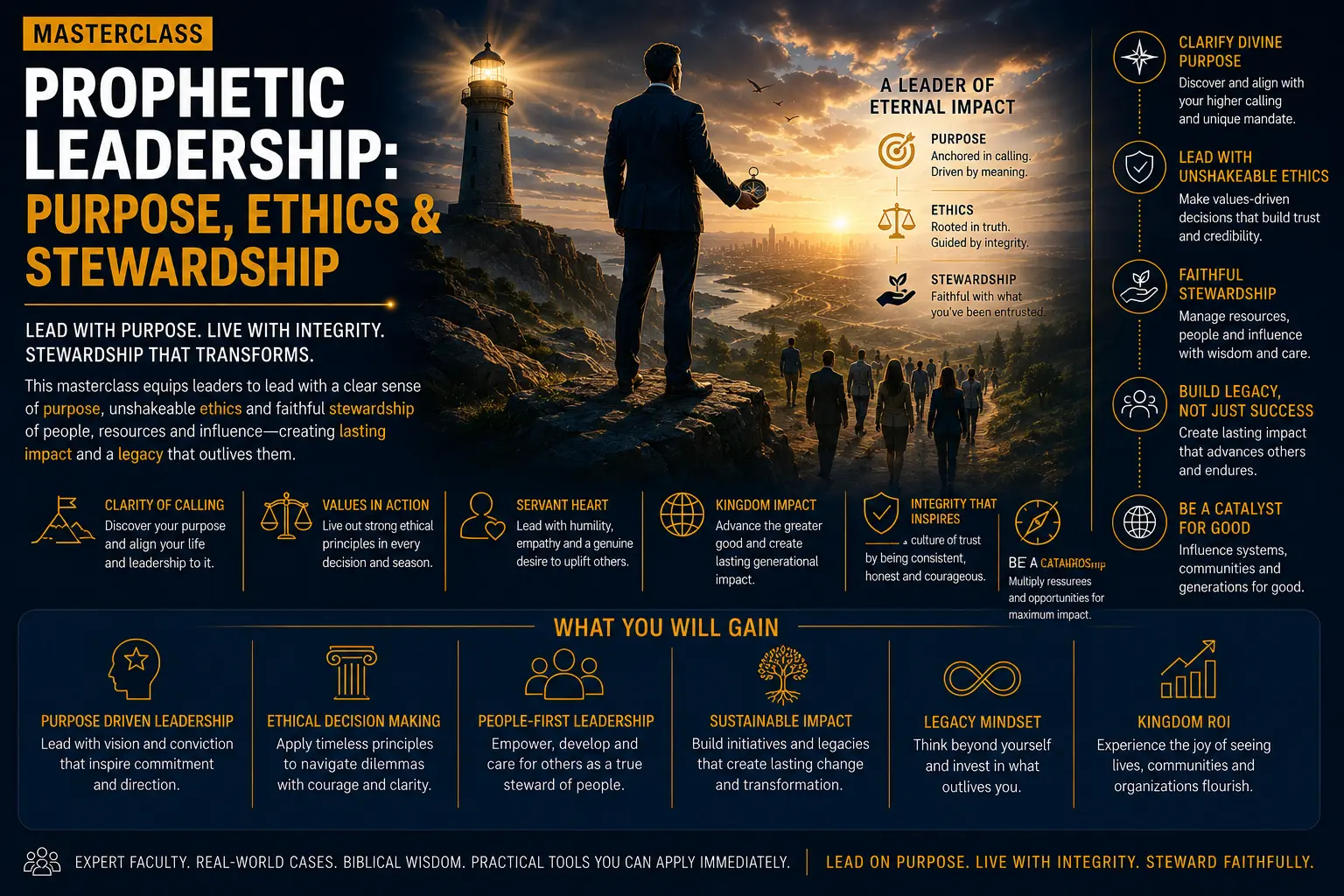
Leading with Clarity, Courage and Conscience
The Prophetic Leadership Masterclass develops leaders who combine strategic foresight with moral clarity, courage, humility, compassion, justice and purpose. Rooted in Islamic teachings and the Seerah of Prophet Muhammad ﷺ, the program translates prophetic values into practical leadership behavior for contemporary organizations navigating disruption, AI and complex stakeholder expectations.
- Masterclass
- Prophetic Leadership: Purpose, Ethics & Stewardship Masterclass
- Descriptor
- Leading with Clarity, Courage and Conscience
- Institutional Heritage
- Prophetic Leadership Institute (PLI) / CEE-DLI collaboration
- Primary Audience
- Senior executives, directors, public-sector leaders, Muslim leaders, leadership teams and organizations seeking values-grounded leadership development
- Core Proposition
- Translate timeless Islamic leadership principles into contemporary executive practice for purpose, ethics, justice, trust, stewardship and responsible leadership in the Age of AI.
- Program Format
- 1-day masterclass; customized corporate program; senior-leadership dialogue; multi-module values-based leadership journey
Why This Masterclass Matters Now
AI-enabled organizations increasingly face questions that cannot be resolved by efficiency or analytics alone: What is fair? What should remain under human accountability? How should leaders preserve dignity, trust and justice while transforming work? What responsibilities do leaders hold as stewards of people, institutions and resources?
Prophetic Leadership provides a values-grounded approach to these questions. It is not about predicting the future; it is about preparing people to face the future with clarity, conscience and responsibility.
- Trust is fragile in periods of disruption and technological change; leadership character becomes strategic infrastructure.
- Ethical AI governance requires human moral agency, accountability and stewardship.
- Purpose must guide performance so that transformation does not become detached from values.
- Justice, consultation, humility, compassion and trustworthiness remain relevant to leadership in modern organizations.
- Leaders need moral courage to make principled decisions when short-term pressure encourages compromise.
Prophetic Leadership for the Contemporary Organization
The program blends revealed knowledge and Prophetic leadership principles with contemporary leadership science and the Future-Ready Leadership architecture.
| Dimension | Executive Application |
|---|---|
| VISIONARY FORESIGHT | Read context wisely, anticipate consequences, prepare people for change and connect present decisions with long-term purpose. |
| MORAL COURAGE | Act on principle despite pressure, popularity, fear or short-term convenience; uphold integrity and accountability. |
| COMPASSIONATE JUSTICE | Balance firmness with mercy, fairness, dignity, inclusion and responsibility toward those affected by leadership decisions. |
| AUTHENTIC HUMILITY | Lead without arrogance; seek counsel, listen, learn, acknowledge limits and remain accountable before God and stakeholders. |
| PURPOSE-DRIVEN STEWARDSHIP | Treat authority, resources, people and institutions as a trust (amanah) and align performance with service, responsibility and long-term value. |
Prophetic Leadership is not about predicting the future. It is about preparing people for it—and anchoring leadership decisions in values that do not expire even as the world changes.
Learning Outcomes
By the end of the masterclass, participants will be able to:
- Understand key Prophetic leadership principles from the Qur'an, Sunnah, Seerah and the example of the Rightly Guided Caliphs.
- Translate values such as amanah (trust/stewardship), adl (justice), shura (consultation), rahmah (compassion) and humility into contemporary leadership behavior.
- Apply moral courage and ethical foresight to complex executive decisions.
- Connect purpose with performance and stewardship with organizational responsibility.
- Strengthen trust, psychological safety, dignity and compassion in leadership relationships.
- Apply values-grounded judgment to AI-enabled decisions, governance and workforce transformation.
- Reflect on personal leadership character and develop a practical leadership roadmap.
- Build a legacy defined by service, integrity and sustainable impact.
Who Should Attend
- Board directors, CEOs and senior executives
- Public-sector, government and institutional leaders
- Muslim business and community leaders
- Leaders responsible for culture, ethics, governance and people
- Entrepreneurs and next-generation leaders
- Organizations seeking values-based leadership grounded in Islamic principles
- Leadership consultants and facilitators working in Muslim-majority contexts
Masterclass Structure
The standard format is designed as an executive working session rather than a lecture. Each module combines strategic input, facilitated dialogue, case-based discussion, reflection and application.
Module 1 – Foundations of Prophetic Leadership
Islamic leadership foundations from Qur'an and Sunnah, the Seerah of Prophet Muhammad ﷺ, and the leadership example of the Rightly Guided Caliphs. Leadership as trust, service and responsibility.
Module 2 – Purpose, Amanah and Stewardship
Authority as a trust; aligning organizational purpose, personal intention, resource stewardship and long-term responsibility.
Module 3 – Justice, Consultation and Ethical Judgment
Adl, shura, fairness, listening, accountability, evidence, balancing stakeholder interests and making principled decisions under ambiguity.
Module 4 – Moral Courage, Humility and Character
Courage without ego, humility without weakness, self-discipline, integrity, keeping commitments and demonstrating consistency under pressure.
Module 5 – Compassionate Leadership and Human Dignity
Rahmah, empathy, dignity, inclusion, psychological safety, conflict, forgiveness and leading people through uncertainty and change.
Module 6 – Prophetic Leadership in the Age of AI
Human moral agency, responsible AI, ethical governance, workforce dignity, transparency, accountability and preserving human judgment in intelligent systems.
Module 7 – From Purpose to Performance and Legacy
Translating values into organizational behavior, culture and measurable outcomes. Personal reflection, 90-day leadership commitment and long-term stewardship.
Executive Application Exercises
- Prophetic Values Reflection: identify leadership strengths, gaps and character priorities.
- Moral Compass Case: examine a difficult decision involving performance, fairness, technology and stakeholder pressure.
- Shura in Practice: structured consultation exercise for a complex strategic decision.
- Amanah / Stewardship Map: identify responsibilities toward employees, customers, owners, community and future generations.
- 90-Day Prophetic Leadership Roadmap and accountability commitment.
Illustrative Case / Discussion Themes
- Ethical AI decision affecting employees or customers
- Leadership decision balancing performance pressure with justice and dignity
- Organizational transformation requiring consultation and trust
- Public-sector or institutional stewardship dilemma
- Crisis requiring moral courage, transparency and compassion
Learning Methodology
- Dual-lens facilitation combining Islamic Studies / revealed knowledge with contemporary executive leadership practice where appropriate
- Reflection on Qur'anic, Prophetic and Seerah-based leadership principles
- Contemporary organizational case discussions
- Executive dialogue and values-based dilemma analysis
- Peer reflection, consultation (shura) and coaching conversations
- Personal action planning and leadership-character commitments
- Optional post-masterclass coaching or organizational values integration
Corporate Customization
The program should be customized respectfully to the client organization's faith context, leadership values, strategy and desired leadership behaviors.
- Organizational values, mission and leadership competencies
- Relevant Qur'anic / Seerah themes selected with Islamic Studies subject-matter expertise
- Public-sector, corporate or community leadership context
- AI ethics and governance dilemmas relevant to the organization
- Culture and trust challenges
- Leadership case studies aligned to participants' roles
- Co-facilitation by Islamic Studies and contemporary leadership experts where appropriate
Delivery Options
| Format | Who Should Attend | Purpose |
|---|---|---|
| Senior Leadership Dialogue | Boards, CEOs and senior leaders | Values, stewardship, ethical governance and strategic reflection |
| 1-Day Executive Masterclass | Senior leaders and leadership cohorts | Core Prophetic principles plus contemporary application and action plan |
| 2-Day Immersive Program | Leadership cohorts | Deeper Seerah, cases, reflection, applied ethics and leadership practice |
| Customized Corporate Journey | Enterprise leadership cohorts | Values integration, leadership development, coaching and organizational application |
Organizational Outcomes
- Stronger ethical leadership and organizational trust
- Greater alignment between purpose, values and performance
- More principled decision-making under pressure
- Leadership culture grounded in stewardship, justice and responsibility
- Greater compassion, dignity and psychological safety
- More responsible governance of AI and transformation
- Leadership legacy focused on service and sustainable impact
Conclusion
Lead with Purpose. Govern with Conscience. Serve as a Steward.
The most future-ready organizations will not be those that merely adopt smarter systems. They will be those led by people whose values, judgment and character are strong enough to govern those systems responsibly.
The Prophetic Leadership Masterclass connects timeless Islamic leadership principles with the realities of modern executive leadership, helping leaders shape organizations with clarity, courage, justice, compassion and stewardship.
Enquire about a customized Prophetic Leadership: Purpose, Ethics & Stewardship Masterclass.
Research and Intellectual Foundations
CEE/DLI Proprietary Foundations
- Sattar Bawany (2026). Future-Ready Leadership: Preparing Leaders for Disruption, Crisis, and AI-Accelerated Change.
- Sattar Bawany (2025). The Making of a C.R.I.S.I.S. Leader.
- Sattar Bawany (2023). Leadership in Disruptive Times: Negotiating the New Balance.
- Sattar Bawany (2019). Transforming the Next Generation Leaders: Developing Future Leaders for a Disruptive, Digital-Driven Era of the Fourth Industrial Revolution (Industry 4.0).
- Qur'an and Sunnah as the revealed-knowledge foundation for the program.
- Seerah and leadership legacy of Prophet Muhammad ﷺ.
- Leadership example of the Rightly Guided Caliphs.
- Prophetic Leadership Institute (PLI) research and program heritage.
- SHAPER AI Leadership™ Model – Protect Trust through Ethical AI Governance.
- Leadership in Turbulence™ – Navigate and Renew through principled leadership.
Contemporary External Research Context
- Contemporary leadership and AI-governance research may be used to contextualize application, but does not replace or redefine the program's Islamic foundation.
Request the program outline
Ready to explore a partnership?
Speak with a CEE advisor about your leadership transformation agenda.