Upcoming

Executive Masterclass — Manila, 23–24 Nov 2026 · Future-Ready Leadership Webinars — APAC, EMEA & Americas

Reserve your place →
Frameworks & Models

CEE Frameworks & Models for Future-Ready Leadership

CEE and the Disruptive Leadership Institute (DLI) have developed and applied a portfolio of evidence-based leadership frameworks and models drawn from decades of executive development, organizational transformation, executive coaching and leadership research. These frameworks also form part of the knowledge architecture supporting SAGE™ – Strategic AI Guidance for Executives.

AI, Disruption & Crisis Leadership

Frameworks for leading organizations through AI-accelerated transformation, disruption, crisis and sustained uncertainty.

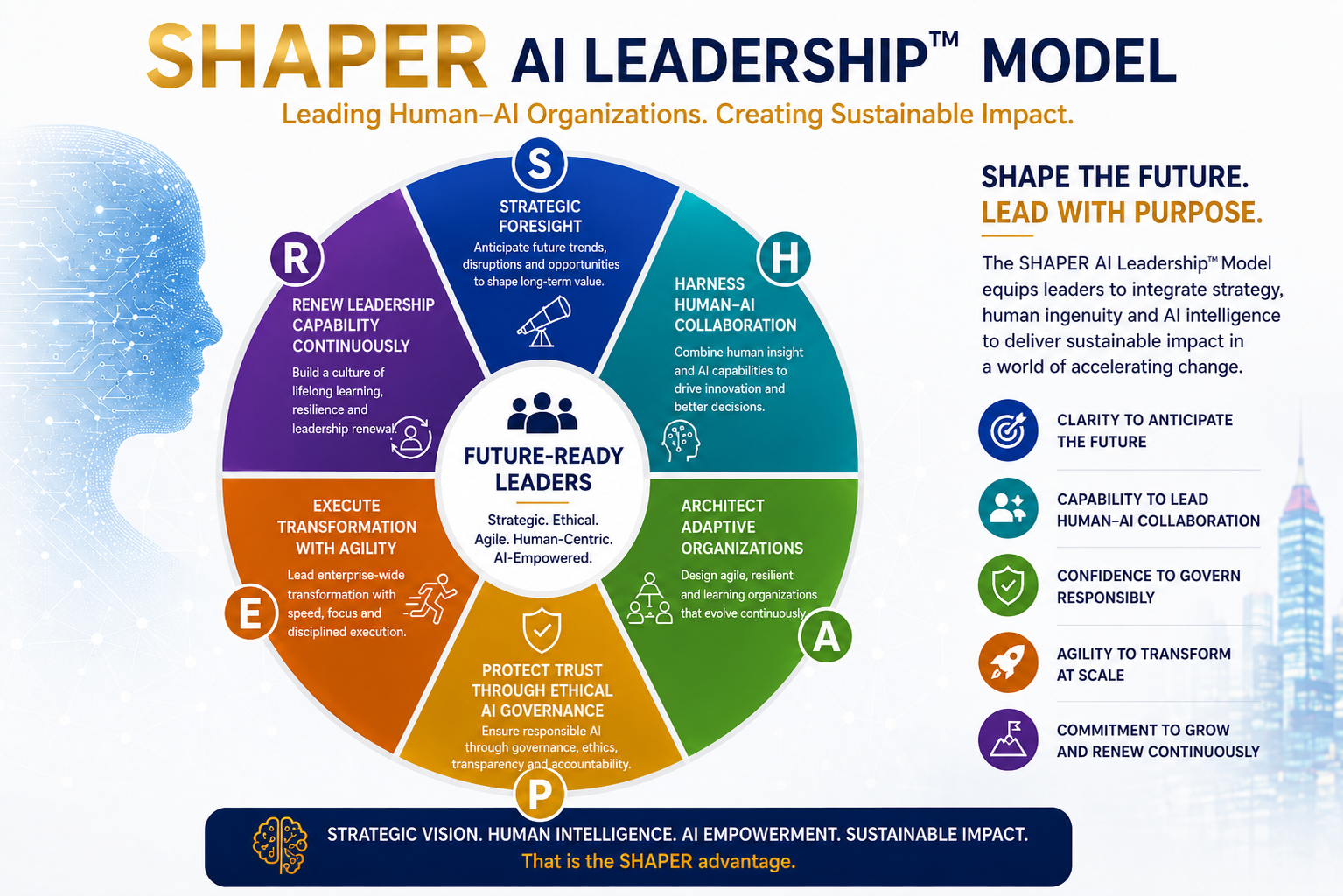
SHAPER AI Leadership Model™ framework diagram

SHAPER AI Leadership Model™

CEE's flagship model for leading in the Age of AI. It defines six executive dimensions required to lead human–AI organizations: Strategic Foresight, Harness Human–AI Collaboration, Architect Adaptive Organizations, Protect Trust through Ethical AI Governance, Execute Transformation with Agility, and Renew Leadership Capability.

What it addresses
The leadership capability gap created by AI adoption — where technology advances faster than executive judgement, governance and organizational design.
Leadership application
Used in C-suite development, AI leadership readiness assessments and Board briefings to build future-ready leadership capability.
See framework
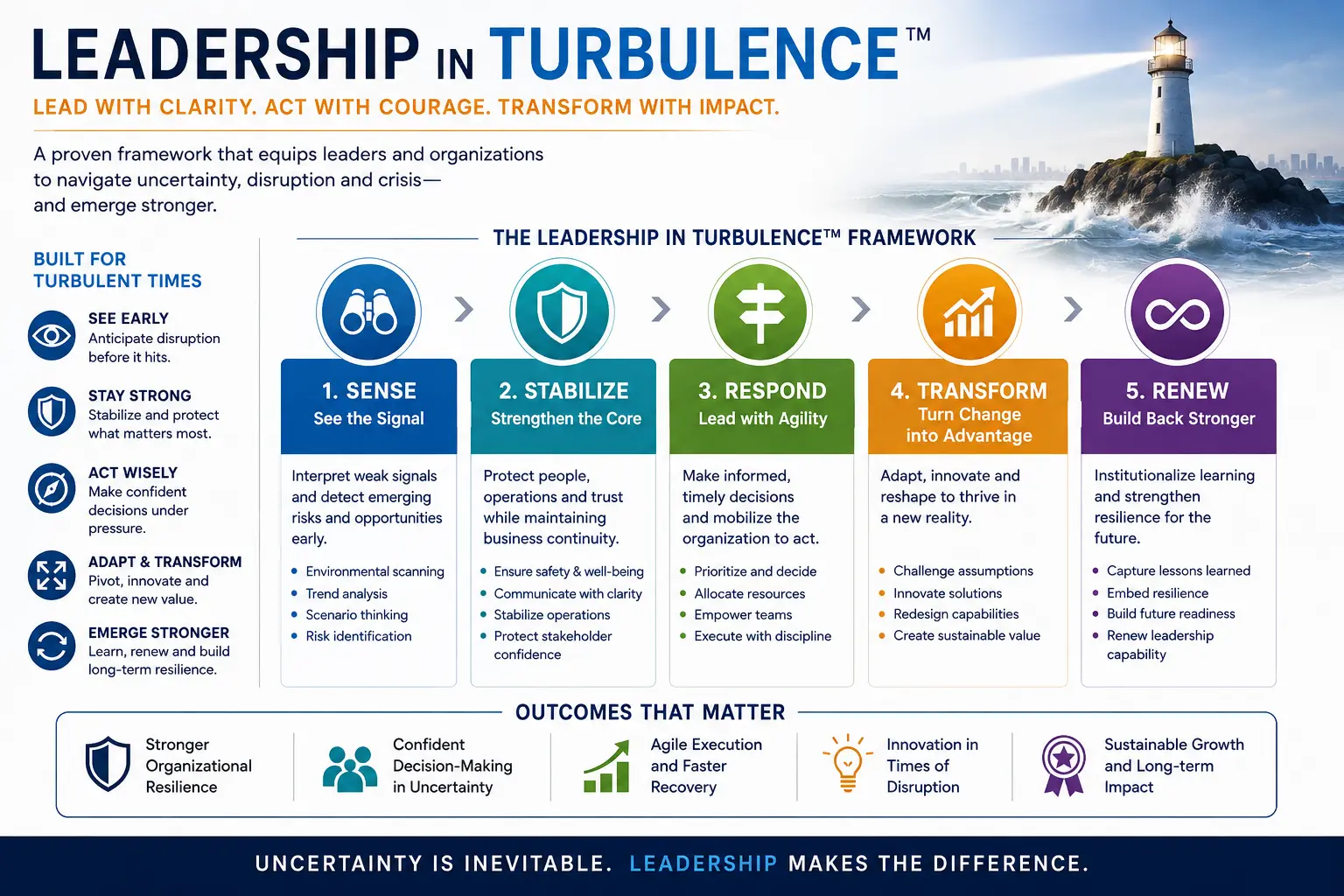
Leadership in Turbulence™ framework diagram

Leadership in Turbulence™

A five-imperative framework for leading through turbulence — Sense, Stabilize, Respond, Transform and Renew — enabling executives to hold steady in the short term while repositioning the enterprise for what comes next.

What it addresses
Compounding disruption: geopolitical volatility, technology shocks, stakeholder scrutiny and continuous change fatigue.
Leadership application
Applied in crisis and transformation leadership programmes, executive team alignment and Board resilience conversations.
See framework
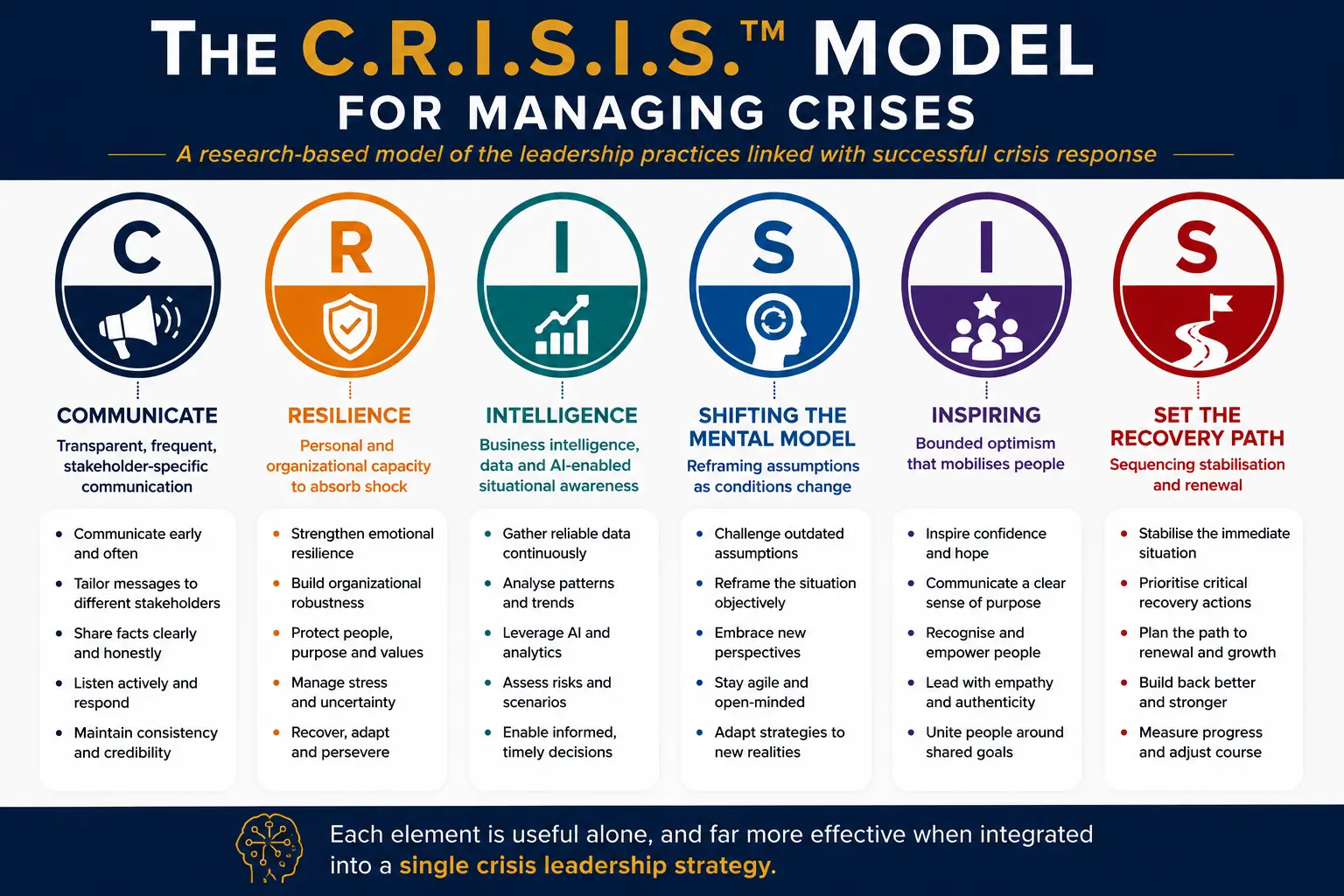
The C.R.I.S.I.S.™ Model for Managing Crises framework diagram

The C.R.I.S.I.S.™ Model for Managing Crises

A research-based model of the leadership practices linked with successful crisis response: Communicate, Resilience, Intelligence (business intelligence and data analytics), Shifting the Mental Model, Inspiring, and Set the Recovery Path. Each element is useful alone, and far more effective when integrated into a single crisis leadership strategy.

  • Communicate — transparent, frequent, stakeholder-specific communication
  • Resilience — personal and organizational capacity to absorb shock
  • Intelligence — business intelligence, data and AI-enabled situational awareness
  • Shifting the Mental Model — reframing assumptions as conditions change
  • Inspiring — bounded optimism that mobilises people
  • Set the Recovery Path — sequencing stabilisation and renewal
What it addresses
How executives lead when facts are incomplete, stakeholder trust is fragile and decisions cannot wait — increasingly amplified by AI-speed information cycles.
Leadership application
Crisis leadership masterclasses, executive crisis simulations, Board crisis-preparedness reviews and post-crisis recovery planning.
Official DLI source
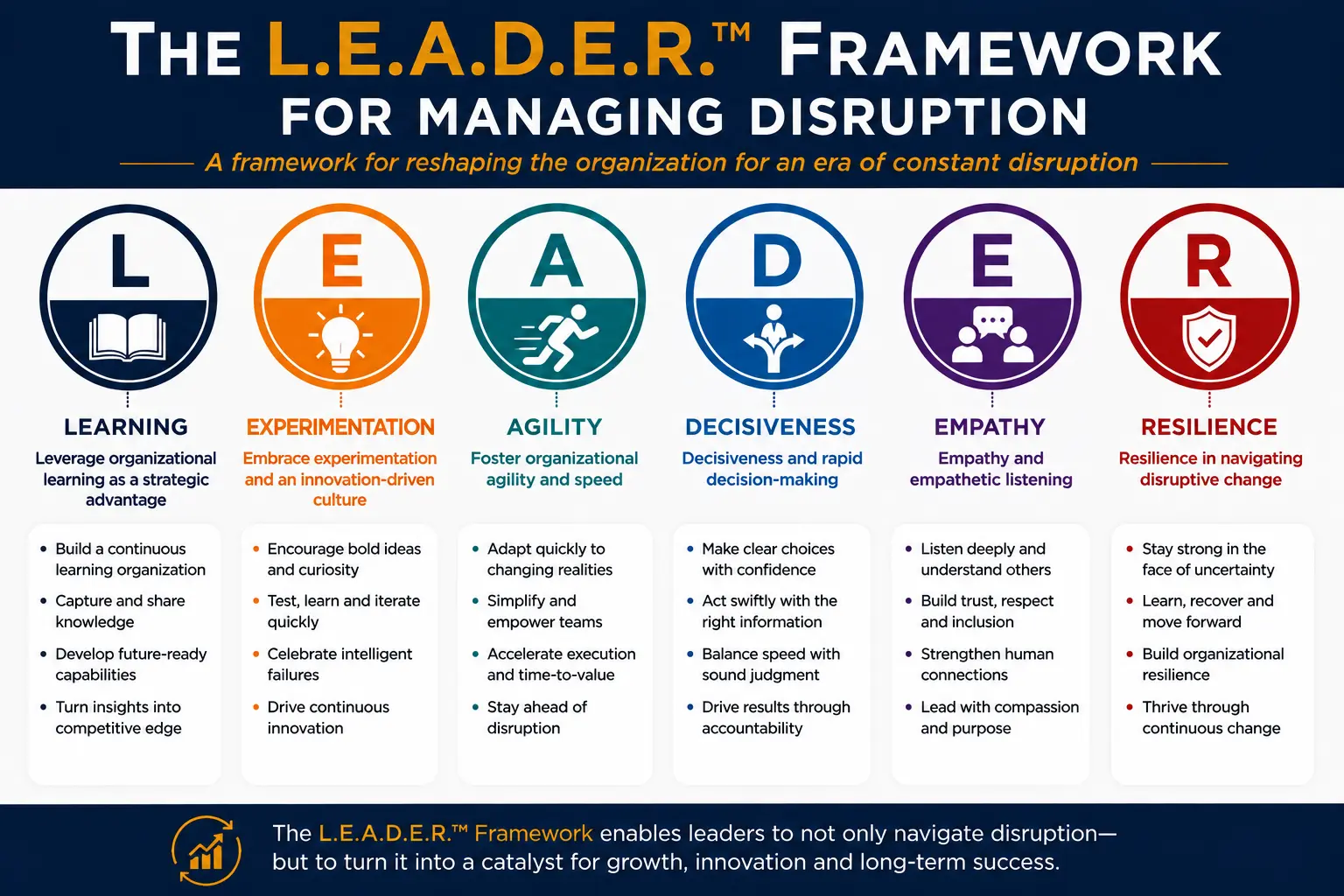
The L.E.A.D.E.R.™ Framework for Managing Disruption framework diagram

The L.E.A.D.E.R.™ Framework for Managing Disruption

A framework for reshaping the organization for an era of constant disruption: Leverage organizational Learning as a strategic advantage; Embrace Experimentation and an innovation-driven culture; foster organizational Agility and speed; Decisiveness and rapid decision-making; Empathy and empathetic listening; and Resilience in navigating disruptive change.

  • L — Leverage organizational learning as a strategic advantage
  • E — Embrace experimentation and an innovation-driven culture
  • A — Foster organizational agility and speed
  • D — Decisiveness and rapid decision-making
  • E — Empathy and empathetic listening
  • R — Resilience in navigating disruptive change
What it addresses
The gap between resilience and agility — organizations that can absorb shock but cannot adapt fast enough to AI-accelerated market change.
Leadership application
Enterprise transformation design, operating-model reviews, leadership pipeline development and executive decision-making capability.
Official DLI source
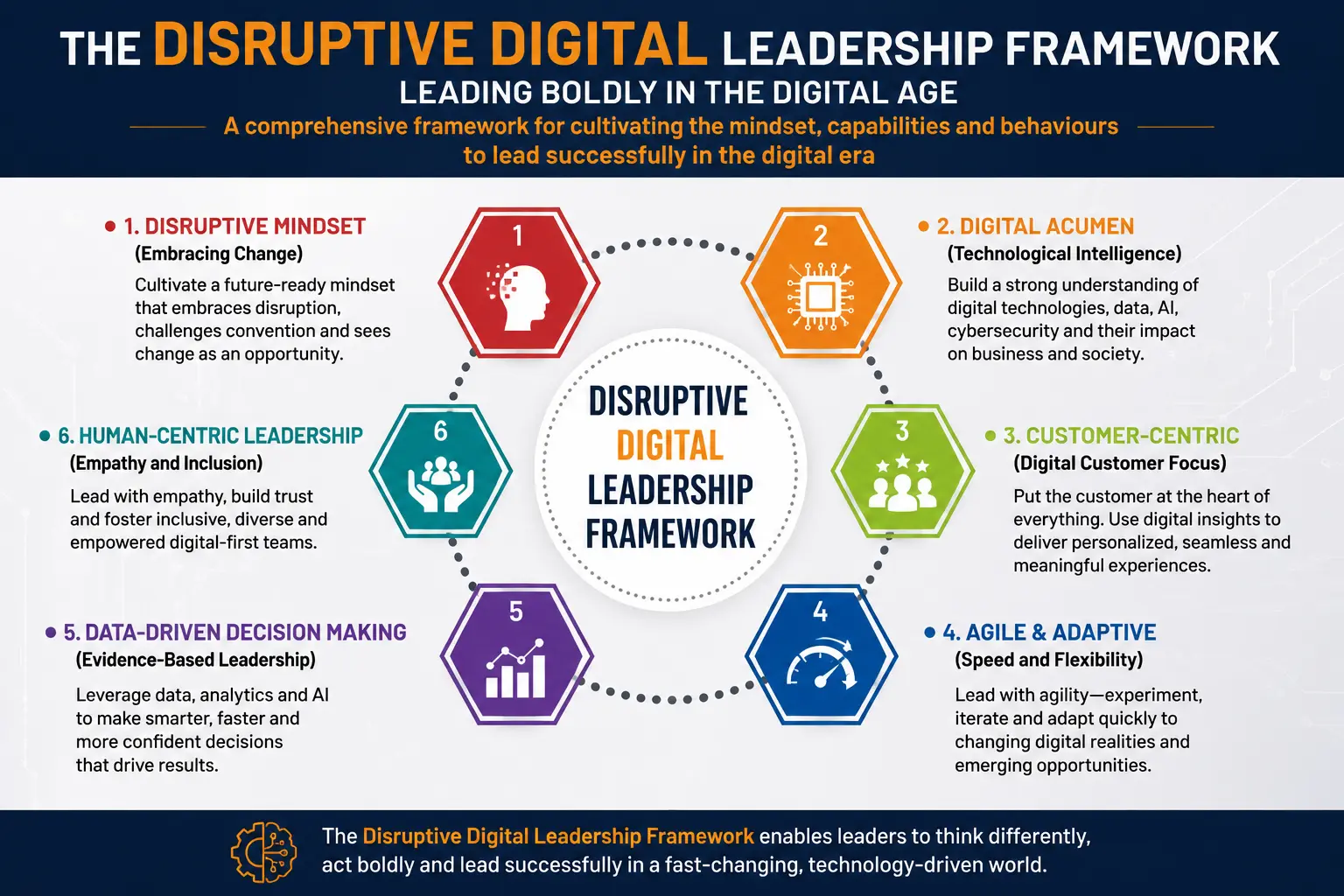
The Disruptive Digital Leadership Framework framework diagram

The Disruptive Digital Leadership Framework

Set against the V.U.C.A.D. environment — Volatility, Uncertainty, Complexity, Ambiguity and Disruption — this framework defines the competencies of the disruptive digital leader: a visionary, entrepreneurial and innovation-driven mindset (disruptive mentality), cognitive readiness and critical thinking (mental agility), emotional resilience, empathy and social skills (people agility), driving for results (results agility), and adaptability (change agility).

What it addresses
Digital and AI transformation that stalls between vision and execution because leadership capability, not technology, is the constraint.
Leadership application
Digital and AI transformation leadership programmes, executive assessment and development, and succession planning for technology-intensive enterprises.
Official DLI source

Cognitive & Executive Development

Frameworks that strengthen executive thinking, judgement and personal transformation in an environment of AI-augmented decision-making.

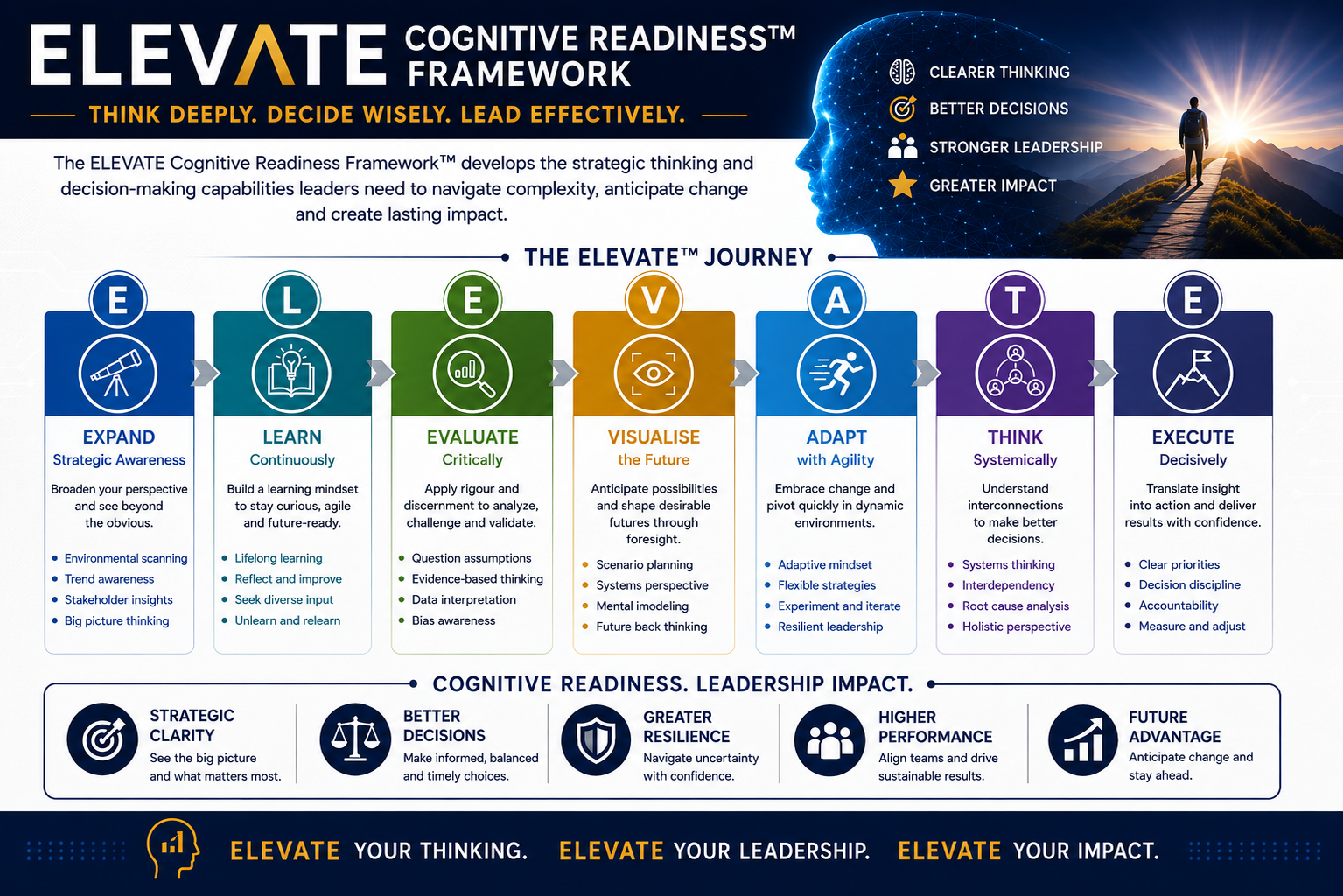
ELEVATE Cognitive Readiness Framework™ framework diagram

ELEVATE Cognitive Readiness Framework™

A structured executive journey — Expand, Learn, Evaluate, Visualise, Adapt, Think and Execute — that develops the cognitive readiness senior leaders need to make high-quality decisions under pressure and ambiguity.

What it addresses
Decision quality at the top of the house, where volume, speed and AI-generated information exceed conventional executive judgement.
Leadership application
Cognitive readiness boot camps, critical thinking masterclasses and executive decision-making development.
See framework
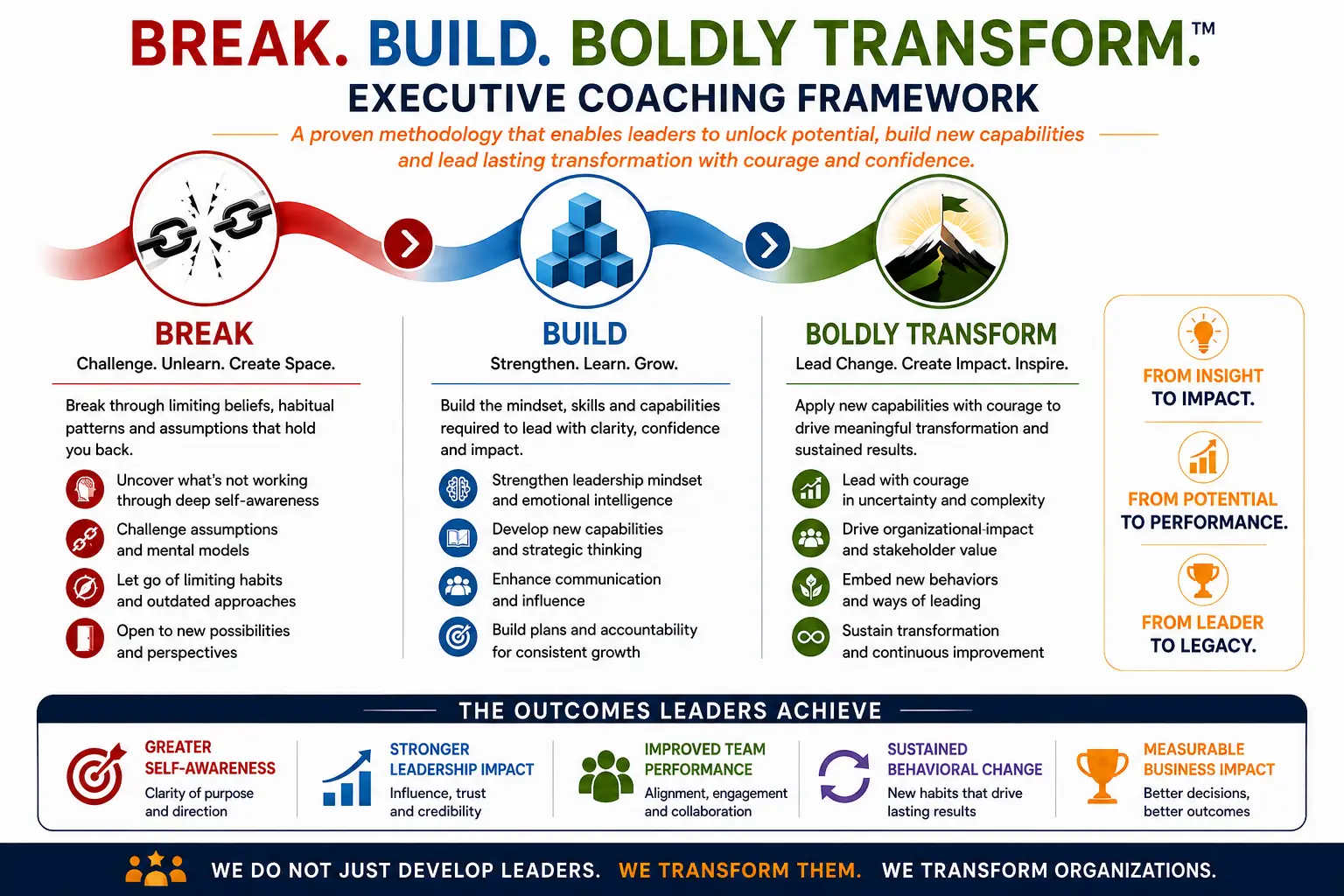
Break. Build. Boldly Transform.™ Executive Coaching Framework framework diagram

Break. Build. Boldly Transform.™ Executive Coaching Framework

CEE's three-stage executive coaching framework: Break — letting go of yesterday's leadership; Build — developing future-ready leadership capability; and Boldly Transform — leading organizational renewal as a continuous capability rather than a one-time project.

What it addresses
Executives whose past success formulas no longer fit a human–AI operating environment.
Leadership application
C-suite and transition coaching, CEO succession, and leadership renewal for executive teams.
See framework

Organizational & Team Performance

Frameworks that translate leadership capability into team execution and sustained enterprise performance.

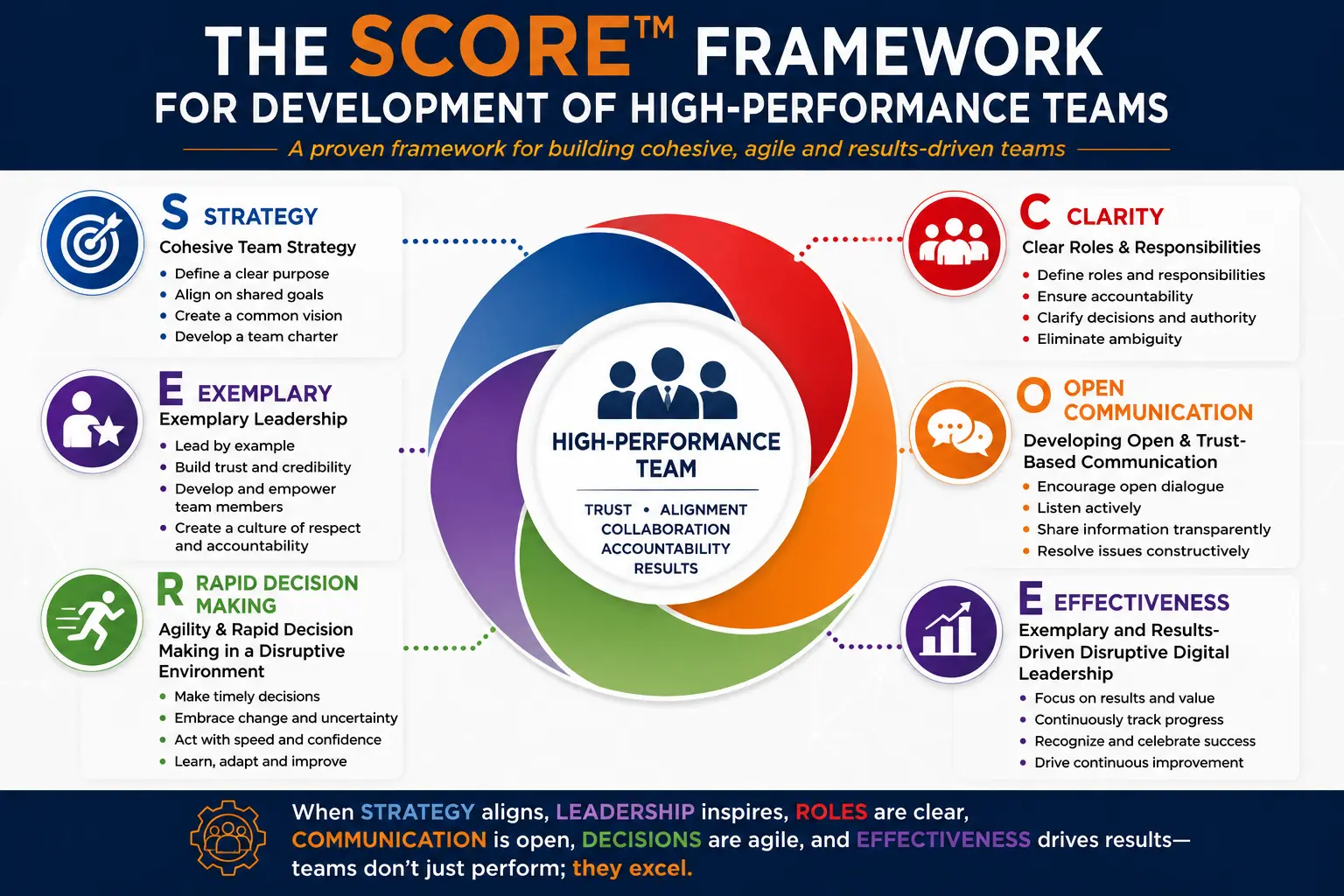
The SCORE™ Framework for Development of High-Performance Teams framework diagram

The SCORE™ Framework for Development of High-Performance Teams

High-performing teams demonstrate synergism — the combined effect exceeds the sum of individual efforts. SCORE™ identifies the complementary characteristics that make this possible: cohesive Strategy, Clear roles and responsibilities, Open communication, Rapid response, and Effective leadership.

  • S — Cohesive strategy aligned to enterprise objectives
  • C — Clear roles and responsibilities
  • O — Open and effective communication
  • R — Rapid response and decision speed
  • E — Effective leadership and accountability
What it addresses
Executive and cross-functional teams that must make fast, decentralised, aligned decisions in a V.U.C.A.D. and AI-enabled environment.
Leadership application
High-performance team masterclasses, executive team coaching, and team effectiveness diagnostics.
Official DLI source
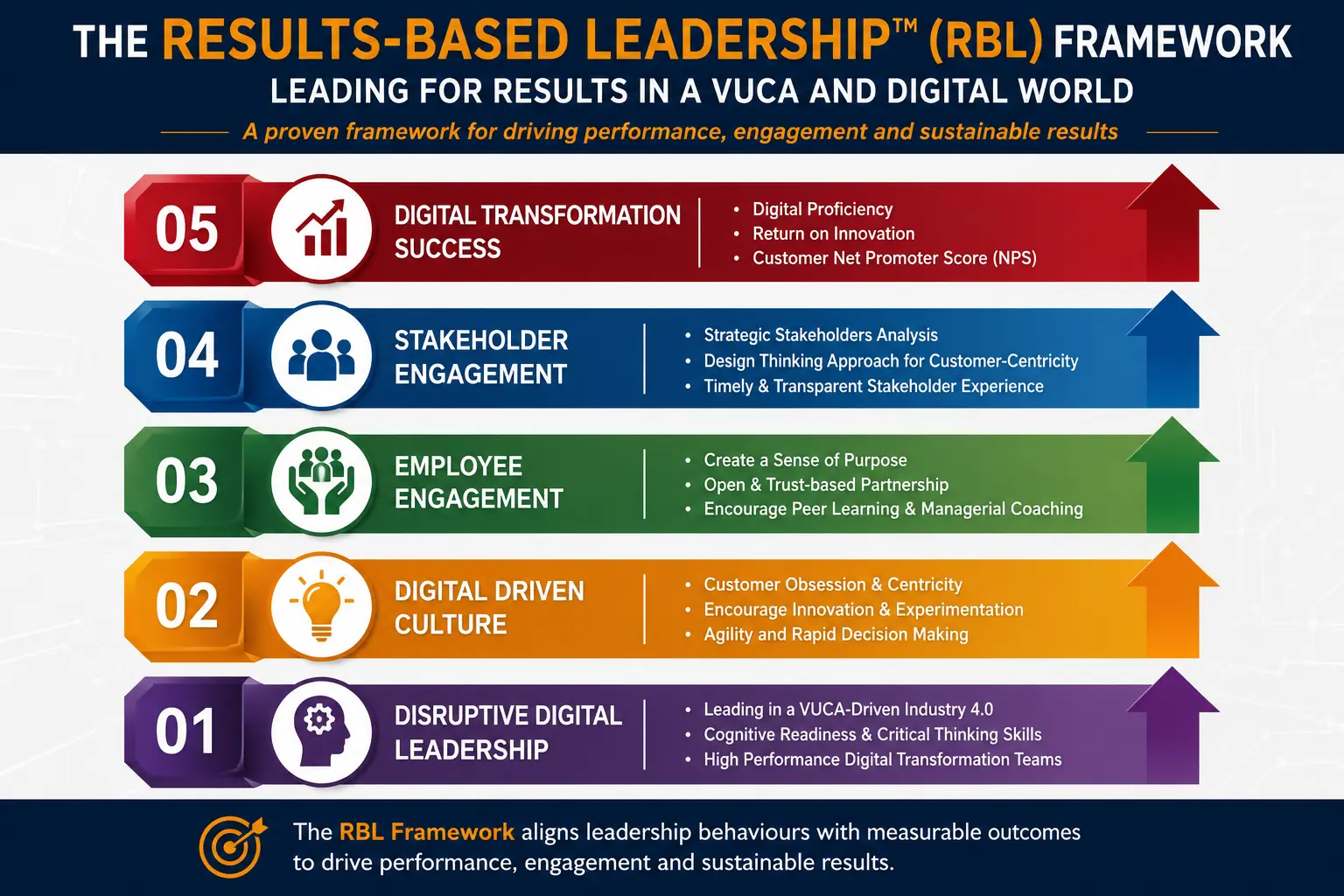
The Results-based Leadership™ (RBL) Framework framework diagram

The Results-based Leadership™ (RBL) Framework

A framework linking leadership effectiveness to sustained organizational results. It begins with self-leadership and self-awareness, extends to leading and engaging the team through the SCORE™ approach, and culminates in engaging all stakeholders so that purpose and mission drive measurable, sustainable outcomes.

What it addresses
The disconnect between leadership development activity and enterprise results, engagement and stakeholder value.
Leadership application
Leadership effectiveness reviews, engagement strategy, performance culture design and executive development architecture.
Official DLI source
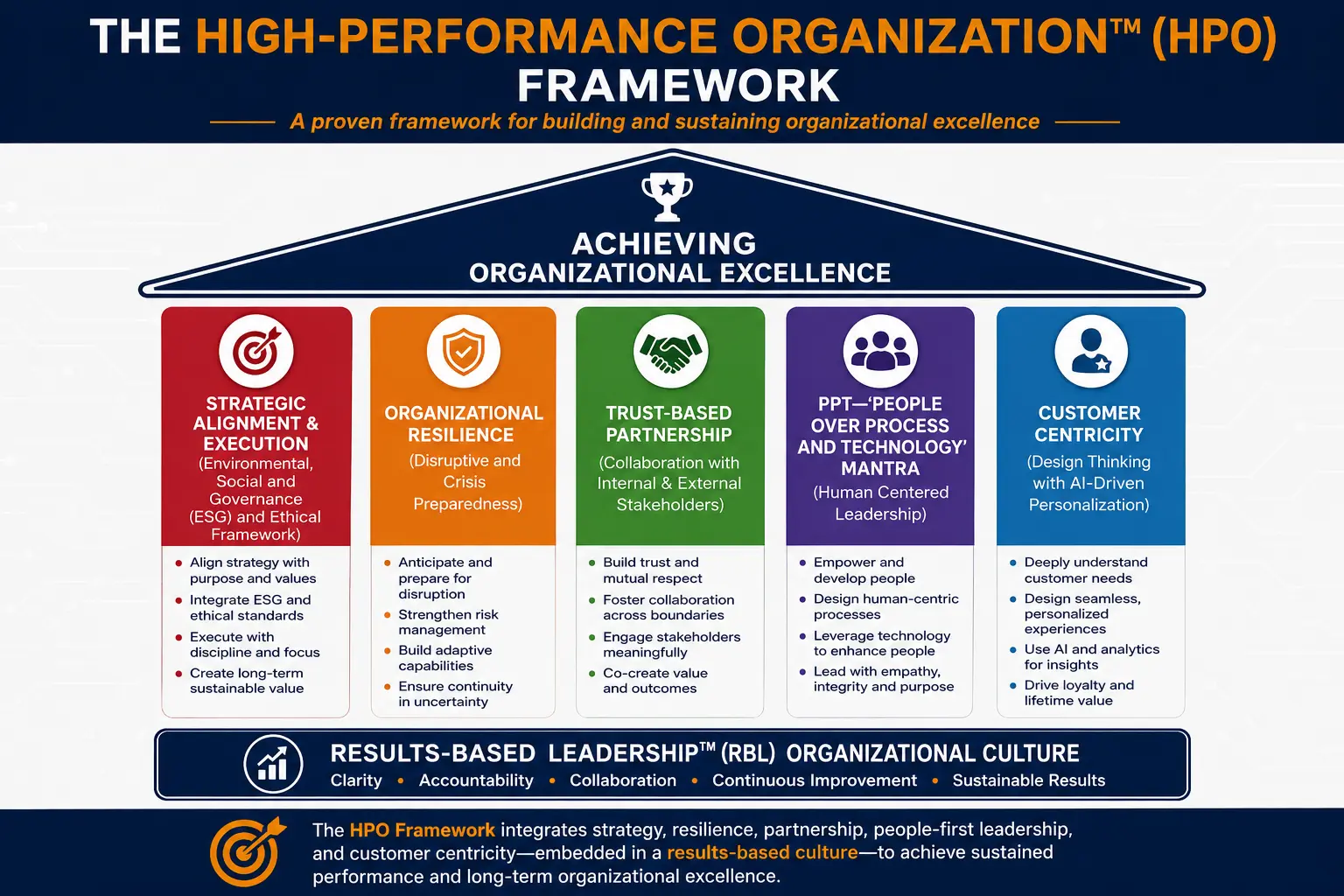
The High-Performance Organization™ (HPO) Framework framework diagram

The High-Performance Organization™ (HPO) Framework

A research-based blueprint for organizations seeking sustainable excellence in a V.U.C.A.D. world, built on five pillars: Strategic Alignment & Execution (including ESG and ethical leadership), Organizational Resilience, Trust-based Partnership with internal and external stakeholders, the PPT mantra of People over Process and Technology, and Customer Centricity through design thinking and AI-driven personalization.

  • Strategic Alignment & Execution (ESG and ethical leadership)
  • Organizational Resilience (disruption and crisis preparedness)
  • Trust-based Partnership with stakeholders
  • PPT — People over Process and Technology
  • Customer Centricity with AI-driven personalization
What it addresses
Enterprises pursuing performance through strategy and technology alone, without the leadership effectiveness, adaptability and people-centric culture that sustain it.
Leadership application
Organizational transformation, culture development, Board and CEO advisory, and enterprise performance diagnostics.
Official DLI source

Frameworks Powering SAGE™

SAGE™ – Strategic AI Guidance for Executives is informed by the published thought leadership, proprietary frameworks and executive advisory principles of Prof. Sattar Bawany and CEE. Together with CEE/DLI research, books and executive advisory practice, these frameworks provide the context SAGE™ draws on when responding to executive leadership, governance and transformation questions.

SAGE™ responses are AI-generated and are not personally written or personally endorsed by Prof. Sattar Bawany.

Ask SAGE™

Ready to explore a partnership?

Speak with a CEE advisor about your leadership transformation agenda.